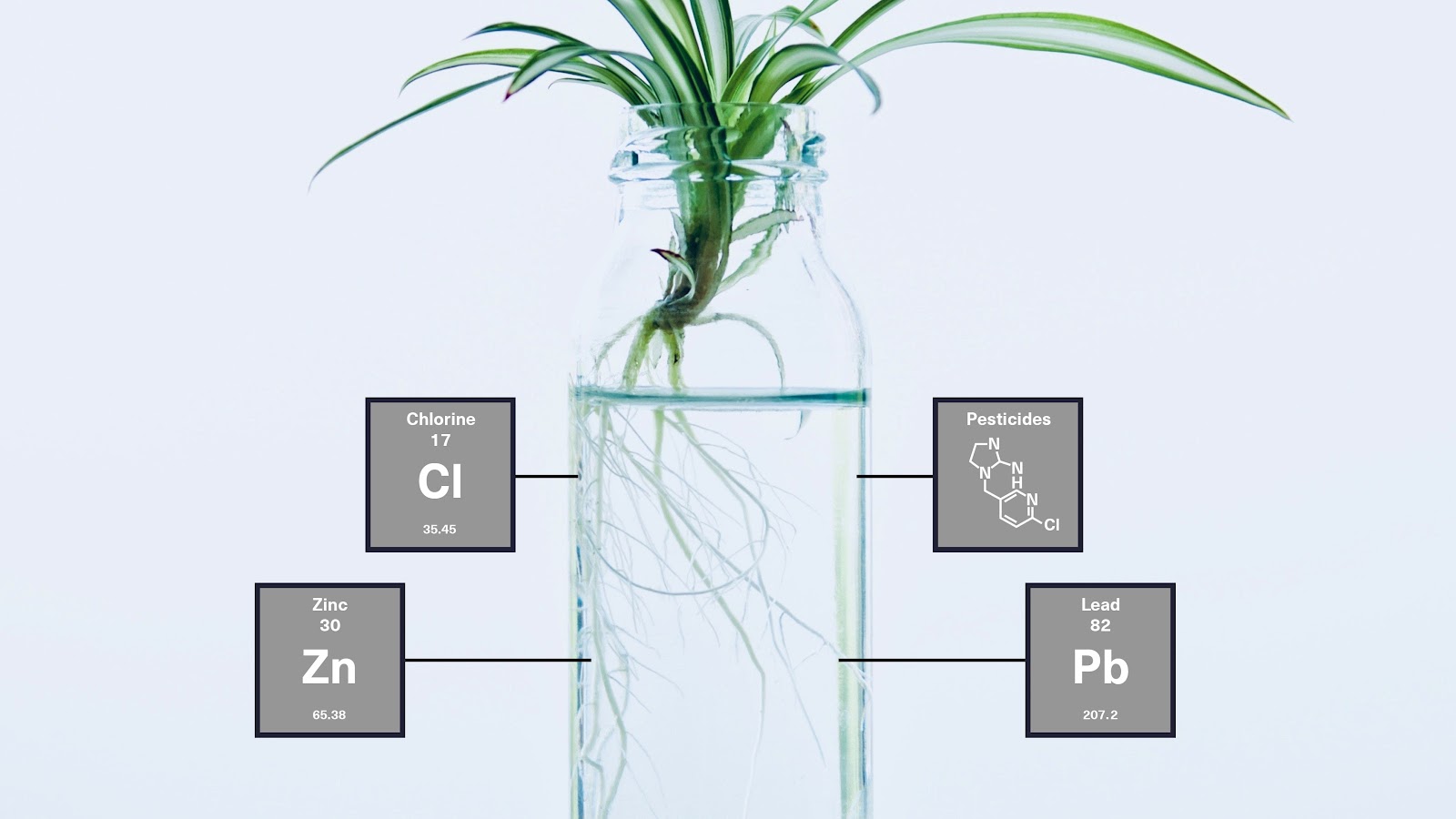
Beware of hard water.
While minerals like calcium, magnesium, and potassium are beneficial to plants, they can also be harmful in high concentrations.
Remember, hard water is caused by a build-up of excess minerals, like calcium. Those excess minerals often leave white deposits on surfaces like sinks and faucets, and soap scum in the shower. Plus, hard water can even have a metallic taste and a cloudy look.
The critical problem with hard water is it makes it difficult for plants to absorb nutrients due to mineral build-up in soil. So if your water is hard, you may need to soften it before filtering it.
pH levels matter to certain species.
It's also important to consider the pH of the water, as different plants have different preferences.
pH is measured on a scale of 0 to 14, with 0 being the most acidic and 14 being the most alkaline. Water can be tested for pH using a pH test strip or a pH meter. As a general rule of thumb, most houseplants will grow well in water with a pH between 6.0 and 7.0.
Clearly Filtered filters tend to have a minimal effect on pH.
Moisture level: Overwatering and underwatering can cause root rot.
It doesn’t matter what source of water you use, too much water, or excess water, can cause poor drainage of the soil which can lead to root rot. You see, when the roots of a plant are constantly submerged in water, the oxygen supply to the roots is reduced, causing the roots to suffocate and eventually die.
And too little water, or less water, can cause root rot, too. Because underwatering leads to fungi growth from dry soil.
So when it comes to plant care, water source matters… as does how often you water your plants and the amount of water you use!