We often consider fires' immediate urgency and danger, but wildfire risks go beyond the first threat. Forest management agencies, like the U.S. Forest Service (www.fs.usda.gov), do their best to mitigate the impact of wildfires. Still, even fire retardants and preventative measures can impact our drinking water. Let's take a closer look at the immediate and long-term effects wildfires can have on our water supply.
The Immediate Impact
During active fires, ash, chemicals, and contaminants make their way into and around water systems through streams, lakes, and reservoirs that supply our drinking water.
And let's not forget that these forest fires are often accompanied by rainstorms. This one-two punch of problems only makes matters worse as the precipitation shuttles byproducts like sediment, contaminants, dissolved organic matter, and debris into surrounding bodies of water. Furthermore, as we battle back, firefighting can accelerate the spread of contamination while introducing fire retardant into the mix. Our water supplies can be rife with chemicals, contaminants, and pollutants in the blink of an eye.
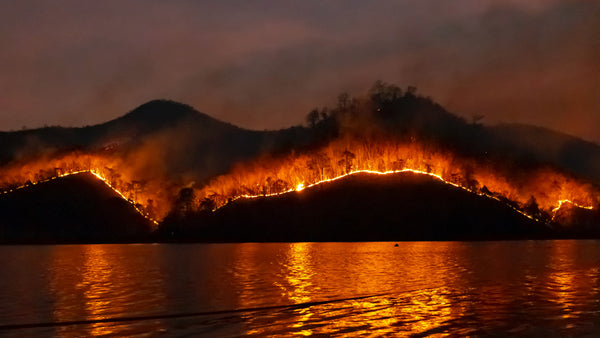
But that's not all: While fires are catalysts for releasing debris flows of sediment, heavy metals, and other contaminants into surface water, they're also leaving behind chemicals as they torch hydrants, meter boxes, pipes, and anything else standing in their way. Melted plastic from pipelines hidden underground and inside structures can pollute the water that flows through. Lenient building codes and limited testing on municipal water supply only enhance the problem. Just like that, more potential hazards — some that cause immediate physical harm and impairment — are added to the list.
Sipping on tap water isn't the only way we're at risk. Some contaminants and chemicals can be inhaled or even absorbed through the skin, just by running polluted water.
So what do all these concerns equate to? At best, fires can change your water's turbidity (sediment), color, taste, and smell. However, more difficult to diagnose issues that lead to “Don't use,” “Don't drink,” and “Boil Water” notices for public health aren't out of the question after these events. Nor are cancer-causing health hazards and other dangers that have yet to be fully understood or detected.
A breakdown of the almost-immediate impact wildfires have on drinking water:
Changes in turbidity, color, taste, and smell.
Build up of ash, soil, soot, and debris.
Notable concentrations of sediment and heavy metals.
Chemicals from melted plastics, pipes, and structures.
Hazards from burning vegetation.
Dissolved organic carbons with the potential to turn into carcinogens.
Chemicals that evaporate into the air and cause diarrhea, nausea, and cancer.
“Don't Use,” ”Don't Drink,” or “Boil Water” advisories.
Whether fires are contained or not, the future of our water can be cloudy. Let’s double-click on the lasting impact wildfires have on drinking water quality.