When it comes to the cons of well water, there are three key reasons it can contain harmful contaminants:
Its exposure to the environment. Several dangerous contaminants can be found in soil and rock, plus well water is susceptible to contamination from natural disasters, agriculture, and other environmental-related activities and events.
Its lack of regulation. Remember, the well owner is responsible for their own water testing and water treatment.
Proximity to septic systems and septic tanks (as well as maintenance of them).
As we’ve said before, well water and city are different and the same. They both can be plagued with dangerous contaminants. And many of those contaminants can (and do) overlap!
Sulfur
A contaminant common among water collected from private wells and water systems in rural areas is sulfur. You’ll be able to recognize a high sulfur concentration due to the “rotten egg” smell emanating from your water. If left untreated, sulfur can lead to diarrhea, dehydration, and other adverse health complications.
The good news: our Water Pitcher with Affinity® Filtration Technology removes the two most common forms of sulfur: up to 99.8% of sulfate and >99.0% of sulfide, as well as hundreds of other contaminants in your water.
The following are just a few of many common contaminants to watch out for in well water:
Bacteria. Well water is vulnerable to bacterial contamination due to contamination from septic systems, animal waste, or agricultural runoff.
Nitrate. Nitrate is a common contaminant in well water, particularly in rural areas where fertilizer and manure are used. High levels of nitrate are particularly dangerous to infants and pregnant women.
Radon. Radon is a naturally occurring radioactive gas that can enter well water from surrounding rock formations. Prolonged exposure to high levels of radon can increase the risk of lung cancer.
Pesticides. Pesticides like atrazine, glyphosate, and chlorpyrifos can leach into groundwater from agricultural and residential use. These pesticides can cause a range of health effects, including reproductive and developmental problems, cancer, and neurotoxicity.
Arsenic, iron, and other heavy metals. These metals naturally occur in soil and rocks. And arsenic, for example, has been linked to several types of cancer.
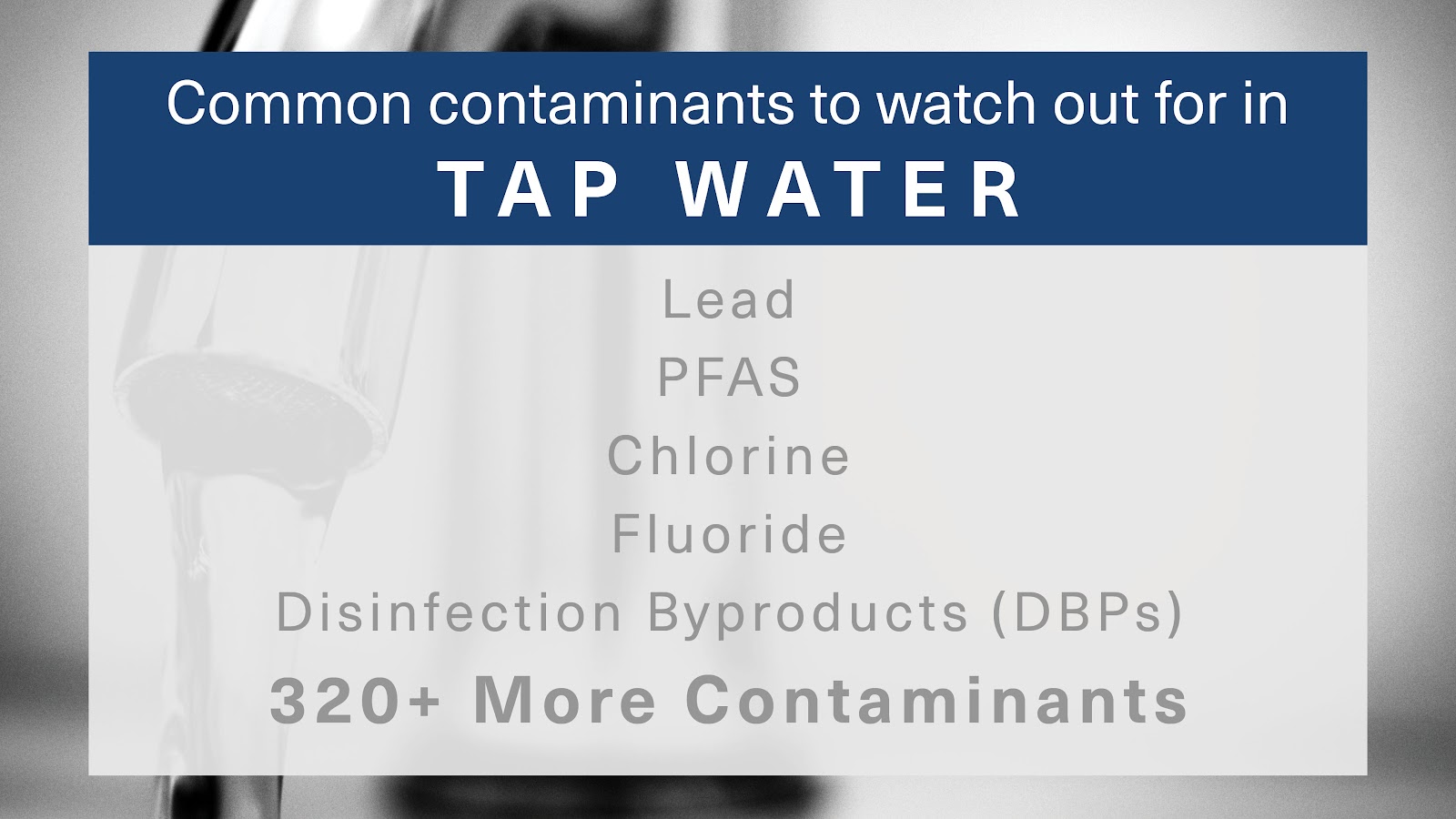
Remember, all of the above contaminants can be found in tap water, too!
![[TF] clearblue cf icon 2bwordmarkup lockup small 51cebc6ee571](http://clearlyfiltered.com/cdn/shop/files/clearblue-cf-icon-2bwordmarkup-lockup-small-51cebc6ee571.png?height=42&v=1780135840)


![[TF] clearblue cf icon 2bwordmarkup lockup small 51cebc6ee571](http://clearlyfiltered.com/cdn/shop/files/clearblue-cf-icon-2bwordmarkup-lockup-small-51cebc6ee571.png?height=36&v=1780135840)