PFOAs are part of a larger family of chemicals called perfluoroalkyl and polyfluoroalkyl substances, or PFASs. PFAS is an umbrella term for over 9,000 chemicals, including PFBS, Genx, PFHXS, and PFNA. These substances are synthetic compounds that are unique for being water and lipid-resistant. Because they deter water, grease, and oil, fluorochemicals have proven useful for various manufacturing processes and industrial applications.
Starting in the 1950s, perfluorooctane sulfonic acid (PFOS) and perfluorooctanoic acid (PFOA) were used to coat a wide range of consumer products, specifically those designed to be waterproof, stain-resistant, or non-stick. Below are just a few of the products in which PFOAs have been used (and are still currently used in many cases).
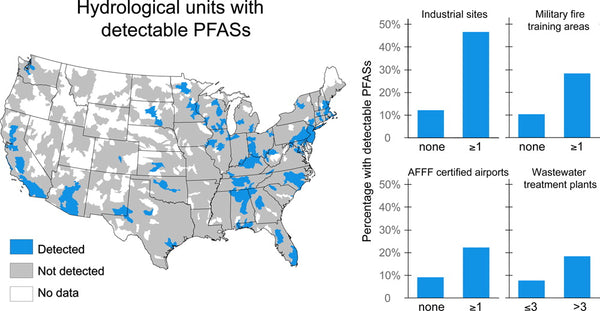
The paths to human ingestion of these chemicals are numerous. Unfortunately, during the manufacturing processes used to create these household wares, substantial quantities of PFOS and PFOA are dumped into the soil, emitted into the air, and poured into the water systems surrounding factory sites, jeopardizing the environmental health of the area.
The products created at these facilities have also been distributed to homes throughout the United States and around the globe through public water systems. Direct contamination from manufacturing and consumer use of these products is estimated to exceed 7000 metric tons of fluorochemicals. As a result, most people have experienced PFOA exposure, and the compounds have become a serious concern for wildlife, the environment, and human health.
PFAS is among the world’s most widely used classes of chemicals, and the particles don’t biodegrade. That means they can accumulate in the environment and in animals, including humans. Unfortunately, water plays an important role in exposure to these toxins because PFAS are highly soluble and can’t be removed by standard wastewater treatment methods.